The Story of Rock and Roll, 1966-1975
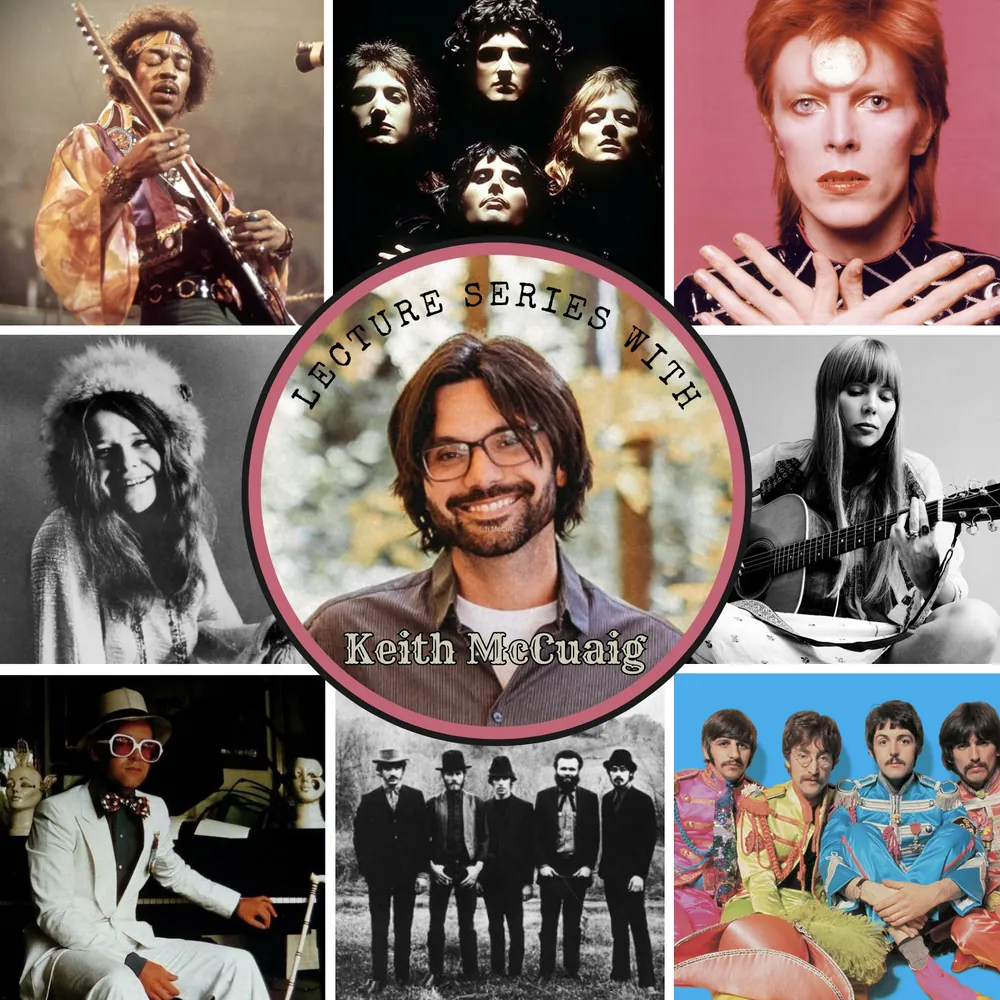
By the mid-to-late 1960s, rock music had solidified its place as a respected artform. No longer dismissed as disposable teen pop, it was widely recognized for its musical and cultural significance. This course focuses on rock music from 1966-1975, including subgenres such as psychedelic rock, blues rock, glam, progressive rock, and singer-songwriters. The social and historical context of this music, its major figures, and descriptions of musical characteristics will be explored. Discover the various sounds and cultural influences of this exciting era of rock music!
- 01Week 1
This course starts with the early psychedelic countercultural scene in San Francisco in the late 1960s. Groups like Jefferson Airplane, the Grateful Dead, and Janis Joplin were innovators in this experimental style, where musicians pushed the boundaries of rock music. A psychedelic scene in London developed around the same time, where the Beatles and others were adding South Asian music, collage recording techniques, and tape loops to the sound of rock music.
- 02Week 2
Continuing with the rock scene in London, this week starts with the Rolling Stones, Cream, Pink Floyd and the Jimi Hendrix Experience. Moving to the rock scene in Los Angeles, we'll examine the musical and technological advances of the Beach Boys, as well as pioneering work by Frank Zappa, The Byrds, The Doors, and others.
- 03Week 3
After a look at the various sonic innovations of the late 60s comes a look at some other 60s styles including roots rock (Creedence Clearwater Revival), blues rock (Jeff Beck), and more pop-oriented rock (Nancy Sinatra, The Mamas and the Papas). We'll finish up our 60s section with outdoor music festivals, including Monterey, and Woodstock, which was one of the major cultural moments of the 20th century. Moving into the 1970s, we'll examine some of the early country rock and roots rock by The Band, The Eagles, Neil Young, and others.
- 04Week 4
A major new style in the early 70s, which built upon the popularity of folk in the previous decade, was singer-songwriter. Joni Mitchell was a pioneer in this emotionally driven, folk-influenced style, as were Carly Simon, Carole King, and James Taylor. The 1970s saw the rise and/or continuation of many new rock subgenres, from folk and folk rock (John Prine, CSNY) to southern rock (The Allman Brothers Band), and the blues-influenced rock of the Guess Who and ZZ Top, to the Latin-tinged blues of Santana. Finally a look at some early hard rock including Led Zeppelin and Aerosmith.
- 05Week 5
Continuing with the 1970s, this week starts with a more challenging and virtuosic music: the classical-influenced progressive rock (Yes, Pink Floyd, Rush, and others). Queen and the Who give us art rock, while David Bowie and Alice Cooper pioneer a glam rock style, both with strong visual elements. Elton John and KISS both built on these developments with a strong emphasis on costumes, and stage effects.
- 06Week 6
Jazz is a foundational style of music, and in the early 70s, a new style called jazz rock emerged. The jazz influence can be heard in the instrumentation used by Van Morrison, jazz-rock bands including Chicago and Steely Dan, and the jazz fusion work of Jeff Beck. The final topic in this course is heavy metal, a style with roots in late 1960s blues rock groups like Cream, Led Zeppelin, and Deep Purple. Heavy blues rock leads us to Black Sabbath, the band widely considered as the first heavy metal band.
Week by week(tap to expand)
- 01Week 1
This course starts with the early psychedelic countercultural scene in San Francisco in the late 1960s. Groups like Jefferson Airplane, the Grateful Dead, and Janis Joplin were innovators in this experimental style, where musicians pushed the boundaries of rock music. A psychedelic scene in London developed around the same time, where the Beatles and others were adding South Asian music, collage recording techniques, and tape loops to the sound of rock music.
- 02Week 2
Continuing with the rock scene in London, this week starts with the Rolling Stones, Cream, Pink Floyd and the Jimi Hendrix Experience. Moving to the rock scene in Los Angeles, we'll examine the musical and technological advances of the Beach Boys, as well as pioneering work by Frank Zappa, The Byrds, The Doors, and others.
- 03Week 3
After a look at the various sonic innovations of the late 60s comes a look at some other 60s styles including roots rock (Creedence Clearwater Revival), blues rock (Jeff Beck), and more pop-oriented rock (Nancy Sinatra, The Mamas and the Papas). We'll finish up our 60s section with outdoor music festivals, including Monterey, and Woodstock, which was one of the major cultural moments of the 20th century. Moving into the 1970s, we'll examine some of the early country rock and roots rock by The Band, The Eagles, Neil Young, and others.
- 04Week 4
A major new style in the early 70s, which built upon the popularity of folk in the previous decade, was singer-songwriter. Joni Mitchell was a pioneer in this emotionally driven, folk-influenced style, as were Carly Simon, Carole King, and James Taylor. The 1970s saw the rise and/or continuation of many new rock subgenres, from folk and folk rock (John Prine, CSNY) to southern rock (The Allman Brothers Band), and the blues-influenced rock of the Guess Who and ZZ Top, to the Latin-tinged blues of Santana. Finally a look at some early hard rock including Led Zeppelin and Aerosmith.
- 05Week 5
Continuing with the 1970s, this week starts with a more challenging and virtuosic music: the classical-influenced progressive rock (Yes, Pink Floyd, Rush, and others). Queen and the Who give us art rock, while David Bowie and Alice Cooper pioneer a glam rock style, both with strong visual elements. Elton John and KISS both built on these developments with a strong emphasis on costumes, and stage effects.
- 06Week 6
Jazz is a foundational style of music, and in the early 70s, a new style called jazz rock emerged. The jazz influence can be heard in the instrumentation used by Van Morrison, jazz-rock bands including Chicago and Steely Dan, and the jazz fusion work of Jeff Beck. The final topic in this course is heavy metal, a style with roots in late 1960s blues rock groups like Cream, Led Zeppelin, and Deep Purple. Heavy blues rock leads us to Black Sabbath, the band widely considered as the first heavy metal band.